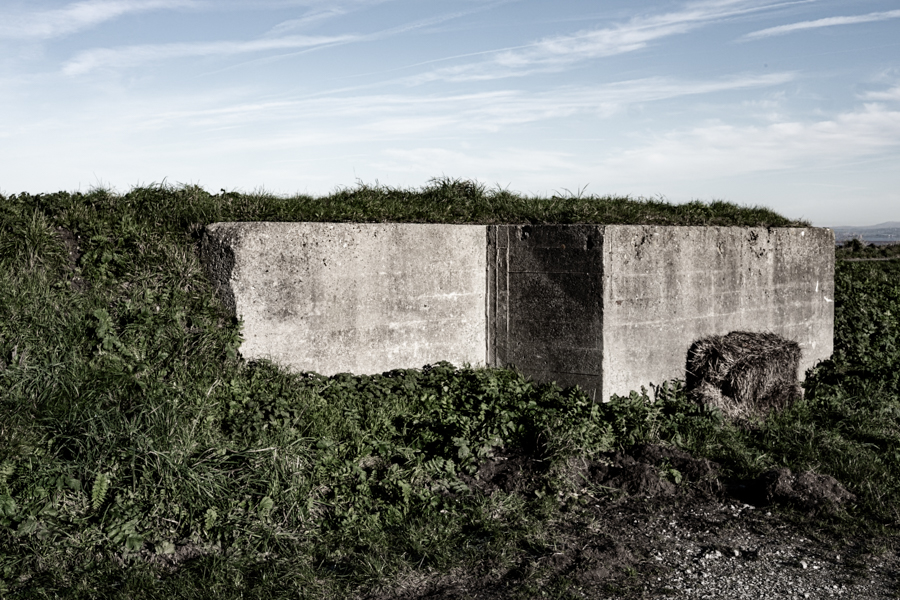
This image plays a crucial role in the developing visual narrative,marking a shift from maritime motifs to land-based architectures of control.The concrete structure symbolises the spatial translation of fear:what begins offshore in myths of plague ships or modern migrant crossings eventually crystallises on land in the form of fortifications,boundaries and deterrents.
In the chapter,this photograph illustrates how the coastline operates as a bio-political space.Historically,coastal defences sought to prevent the spread of disease by keeping infected vessels offshore.During wartime,similar structures were designed to resist enemy incursion.Today,the same coastline becomes implicated in border enforcement and surveillance,particularly around irregular migration.
The concrete block thus signifies a continuity of protective impulse across centuries.It operates at the intersection of ecology,infrastructure and ideology.Its partial burial in vegetation suggests a fading but not forgotten anxiety — an unresolved relationship between safety and fear.In this sense, the image becomes central to the chapter’s argument:that the landscape itself becomes an archive of defensive architectures,each one echoing the myths and crises of its time.