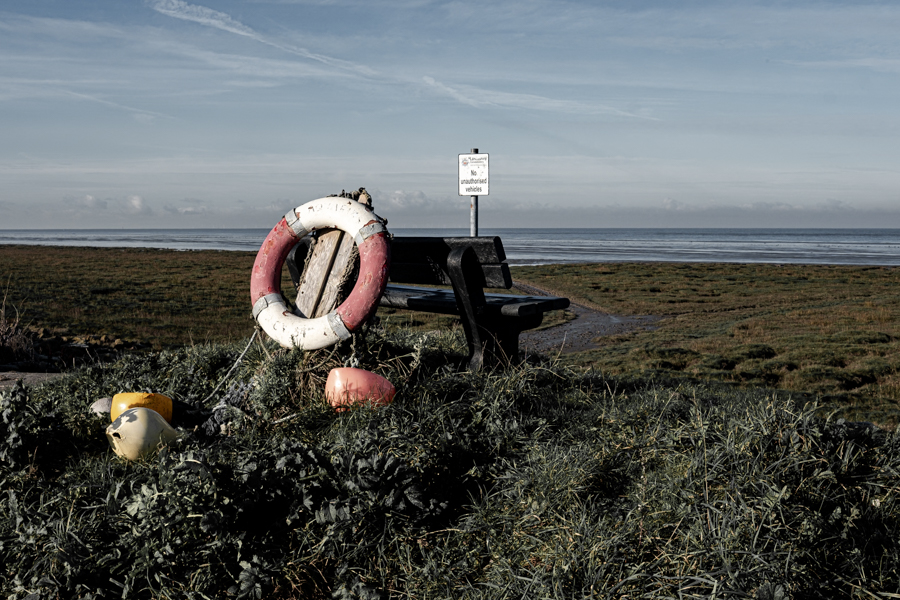
This image plays a central role in constructing the thematic arc of the Plague Ship Project because it encapsulates the dual forces of assistance and control that define coastal life.The life ring symbolises the machinery of rescue an emblem of human intervention against maritime danger while the bench embodies the act of watching,anticipating and interpreting the horizon. Together,they create a visual vocabulary of preparedness, surveillance and response.
The Plague Ship myth provides the foundational narrative layer: a vessel held offshore,managed through distance,a community’s fear spatialised.Into this the photograph introduces a second layer the maritime capitalist system described by Sekula where the sea carries goods effortlessly across borders but restricts human movement.The third narrative concerns the contemporary migration crisis,where the life ring becomes a poignant symbol. It marks the fine line between safety and tragedy,between who is rescued and who is refused.
The marshland itself acts as connective tissue across these narratives.Its openness suggests vulnerability;its expansiveness resonates with the uncertainty of those who look out to sea seeking something unseen.The sign behind the bench quietly reinforces the theme of regulated access,echoing the power structures that govern movement on both land and water.
By placing these objects within the landscape,the photograph creates a layered reading of the coast as a zone of defence, surveillance,rescue and exclusion.It demonstrates how the material environment becomes intertwined with the stories societies tell themselves about danger and belonging.The chapter argues that such visual configurations provide insight into the persistence of maritime anxiety,from historical epidemic fears to present-day struggles over migration and border politics.