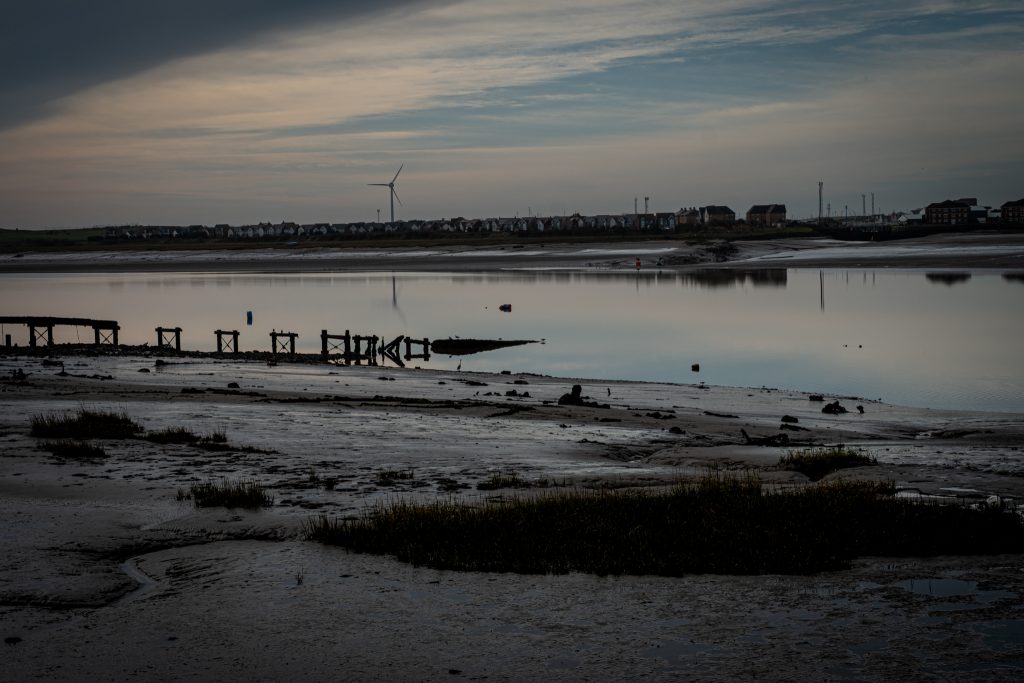
This chapter examines the estuary as a spatial technology of control.Unlike open sea routes or fixed land borders,estuaries function through ambiguity.They allow authorities to slow, observe and regulate movement without overt force.The photograph of the Knott End estuary foregrounds this logic through its compositional stillness and the presence of a collapsed jetty an infrastructure of access rendered obsolete.
Historically,such spaces were ideal for quarantine practices, including the offshore holding of plague ships.In contemporary contexts,similar logics persist through maritime exclusion zones and offshore processing.The estuary becomes a site where fear is managed through delay rather than confrontation.
Visually,the image refuses drama.Its muted palette,flat light and reflective water align with a post-documentary approach that prioritises atmosphere over evidence.The photograph does not show bodies,ships,or conflict;instead,it reveals the geography that makes exclusion possible.In doing so,it positions the landscape itself as an active participant in the politics of movement,a quiet witness to histories of containment,loss,and waiting.