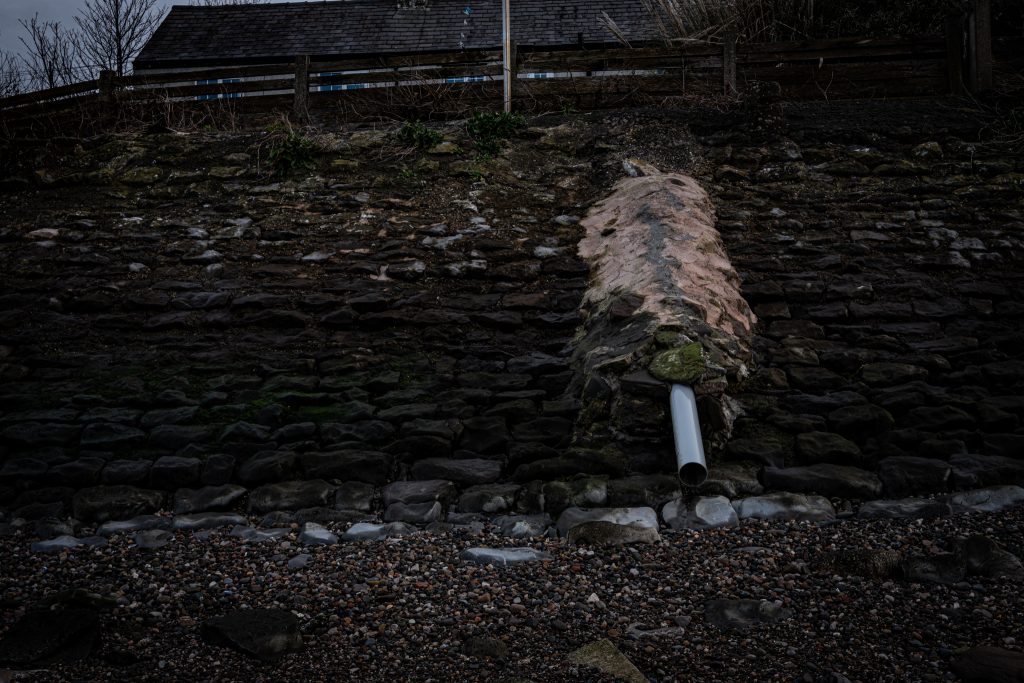
This image foregrounds infrastructure as a material expression of cultural attitudes toward disease and threat.The drainage outlet becomes a point of symbolic convergence,linking early modern plague responses with contemporary systems of environmental and population control.The seawall,reinforced stone and channelled pipe collectively perform an act of exclusion:they maintain an inside and an outside,a protected space and a zone where risk is released.
Historically,plague ships were quarantined offshore under the assumption that danger could be spatially fixed.The sea became a holding zone for contamination,much like drainage zones function today.The logic remains consistent:risk is something to be displaced rather than understood structurally.
In contemporary terms,this logic extends beyond water and disease to encompass migration and border control.Just as drainage manages excess flow,modern states attempt to manage human movement through redirection,deterrence and containment. The pipe,though modest in scale,stands as a quiet monument to this enduring mentality.
By photographing this feature without dramatisation,the image allows the landscape to speak for itself.It reveals how fear becomes embedded in infrastructure,how anxiety shapes space and how the coastline continues to operate as a site where societies negotiate what must be kept in and what must be pushed away.