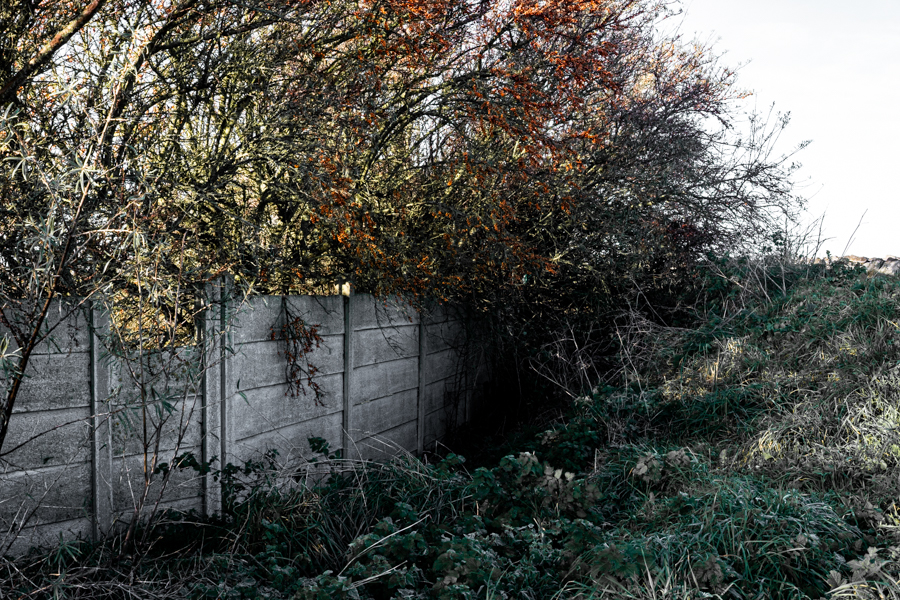
This chapter situates the boundary wall within a broader examination of how landscapes encode social, historical, and political tensions. Unlike the overt symbolism of the shoreline, the inland wall appears understated, almost domesticated.Yet its presence reveals a powerful continuity in the cultural imagination of the coast:the persistent belief that safety depends on separation.
The wall functions as a terrestrial manifestation of the offshore quarantine zone that structures the Plague Ship myth. Both spaces operate on the same logic:danger is external; protection requires distance;security is achieved by immobilising the Other.The chapter positions the wall as part of a network of spatial practices—fences,borders,hedges, embankments that translate maritime anxieties onto the land.
Drawing on Allan Sekula’s insights into maritime globalisation, the chapter also underscores how modern borders reproduce older forms of exclusion under the guise of regulation.While goods travel freely across oceans,people encounter obstacles, surveillance and suspicion.The wall becomes a monument to this contradiction,quietly reinforcing the asymmetry between mobility and containment.
Finally,by exploring the tension between ecological overgrowth and human construction,the chapter argues that landscapes record and resist the histories imposed upon them.The wall may still stand, but nature’s reclamation exposes the fragility of the boundaries we build—and the temporary comfort they provide.