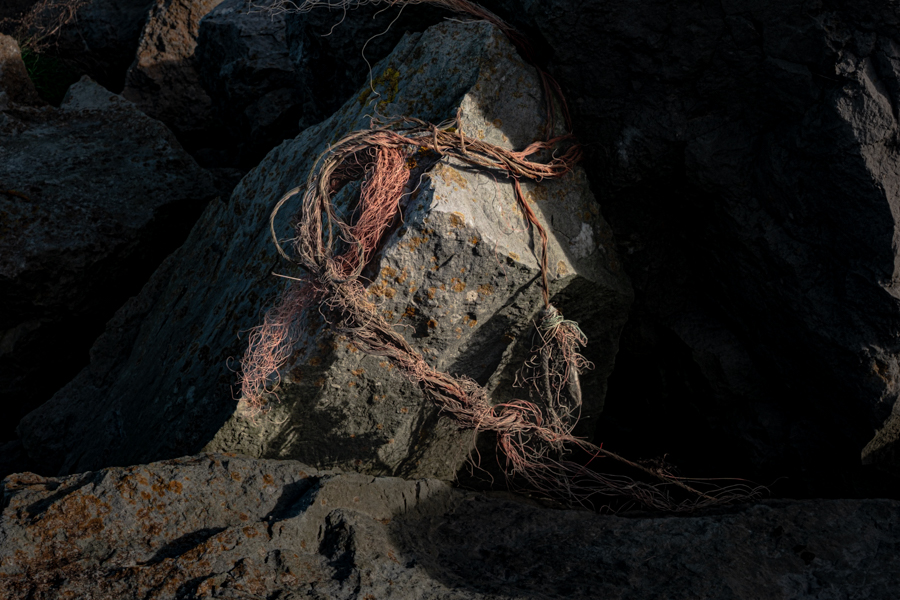
In this chapter,the image introduces an important thematic shift in the project:the move from photographing open landscapes and distant vessels to examining the intimate material residues left behind by the sea.The frayed pink net, woven into the fractures of the rock becomes a symbolic node through which multiple maritime histories can be read simultaneously.
Unlike looser fragments found elsewhere along the coastline,this net is immobilised,suggesting duration,resistance and forced stagnation.Its visual structure a loop pulled tight against the angular geometry of the rocks conjures an image of containment and constraint.Historically,this resonates with the Plague Ship narrative,in which mobility was halted to protect the community.The coastline became a boundary of separation and vessels offshore became temporary prisons of suspended human lives.
In the contemporary period,this immobilisation finds parallels in the governance of migration.Modern maritime borders redefine mobility not as a right but as a privilege:goods traverse oceans seamlessly,while people encounter layers of deterrence.In this sense,the net’s entrapment mirrors the structural conditions faced by migrants navigating hostile waters caught between aspiration and resistance,between movement and the abrupt imposition of stillness.
Simultaneously,the net gestures toward the ideologies embedded in global shipping.Sekula’s analysis of maritime capitalism reveals how the sea hosts both the circulation of value and the suppression of the workers whose labour enables it.Nets,ropes and rigging become material witnesses to these processes,their wear and tear forming a visual record of the economic forces shaping the coast.
By situating this object at the centre of the frame,the photograph shifts the project’s focus from mythic narrative to material evidence,showing how the coastline accumulates the residues of global systems.The net becomes an index of entanglement ecological,economic,historicaland political — making visible the threads that bind plague-era fear to modern anxieties surrounding migration and maritime circulation.